Ordinal Public Goods is BOMB's maintained index of reusable software, fonts and other shared resources inscribed on Bitcoin for use by inscriptions. The starting record is jokie88's ordinalpublicgoods repository, created in June 2023 to collect JavaScript libraries and other resources that could be reused instead of reinscribed into every project.
jokie88/ordinalpublicgoods
2025-07-04
26 September 2026
Why this layer matters
Ordinal recursion changed an inscription from a sealed bundle into something that can compose other on-chain resources. A small HTML inscription can request a shared JavaScript library, image, stylesheet or other inscription content instead of carrying a private copy of every dependency.
That creates something recognisable as an on-chain software commons: immutable versions of libraries can become shared building blocks. The important unit is the capability, not the number of duplicate inscriptions. BOMB therefore groups versions and encodings beneath one capability wherever the source record makes that relationship clear.
The original catalog's last commit on main was 4 July 2025. Its contents remain historically useful, but the time gap means this page should be read as a maintained continuation and normalization project rather than a claim that the source list is complete in 2026. Latest source commit
What becomes possible
- Shared runtimes. A recursive inscription can use a common graphics, UI, compression or application library rather than reinscribing the same code.
- Smaller application inscriptions. Shared dependencies move repeated bytes out of individual application payloads.
- Composable software. Libraries, loaders, fonts and assets can be assembled into larger applications while each dependency retains a stable inscription ID.
- Explicit version choice. Multiple immutable versions can coexist. A project can pin the exact inscription it expects instead of inheriting a mutable web dependency.
- Public infrastructure. A useful inscription can serve projects that were never known to its original inscriber.
Those benefits also create dependency questions. A recursive application should record exact inscription IDs, encodings, expected APIs and source provenance. Immutable dependencies cannot receive an in-place security patch; consumers move to a different inscription instead.
Catalog conventions
One BOMB entry represents one software capability or library family. Different versions, compression formats and helper modules sit underneath it. The catalog preserves inscription links from the source repository while progressively adding source verification, licences, examples and capability pages.
Formats in the source catalog include plain content, gzip, and ord/br Brotli-encoded resources. See Ordinal recursion for the access layer that makes shared inscription resources useful.
Ordinals development frameworks
- Ord Package Manager — A simple package manager for Ord with a html template engine. Provides scripts to test the packages in regtest mode.
- Recursive Library — Library for getting data off recursive endpoints
- Elements by Wizards of Ord — Collection of libraries for inscribing generative art ordinals on Bitcoin
- Open Ordinal — Open Ordinal a suite of tools and libraries designed to enhance the devlopment, functionality and usability of Ordinals.
Generative art, graphics and media
- Three.js
- camera-controls 2.7.0 — Link · format: none
- p5.js
- p5.js 1.6.0 (gzipped) — Link · format: gzip · see example
- p5.js 1.9.0 (brotli) — Link · format: ord/br · see example
- p5.js 1.9.0 (gzipped) — Link · format: gzip · see example
- p5.js 1.9.2 (brotli) — Link · format: ord/br · see example
- p5.js 1.9.2 ( not zipped) — [Link](· format: none
- p5.js-sound-min 1.0.2 — [Link(https://ordinals.com/inscription/935801da5aaeab291b68748b4ccb315f35a88b16096125db45899f2085d727c5i0) · format: none · see example
- p5.js 1.11.2 (brotli) — Link · format: Brotli · example
- matter0js 0.19.0 — Link · format: none
- webGL-fluid-simulation — Link · format: none
- tone.js 14.7.77? — Link · format: none
- generatord v1.3 — Link · format: none · generatord.io
- anime.js 3.2.1 — Link · format: none
- gzipLoader — Link · format: none · example
General JavaScript and application libraries
- brotli/decode.min.js — Link · format: none
- Chroma — Link · format: gzip · Contributed by Lammetje
- fflate 0.8.0 — Link · format: none · example
- html2canvas 1.4.1 — Link · format: none
- jquery 3.7.0 — Link · format: none
- cbor-js 0.1.0 — Link · format: none
- cbor-x 1.5.8 — Link · format: none
- Google Model Viewer
- Apache 2.0 — Link · format: none · untested
- Moment.js 2.29.1 — Link · format: none
- gunzip in fflate — Link · format: gzip · need to do inscription.split("\n")[28]
- axios min js — Link · format: none
- cropper.js 1.5.6 — Link · format: none
- popper.js/core 2.11.8 — Link · format: none
- greensock GSAP 3.6.1 — Link · format: none · may need license?
- algoliasearch 4.18.0 algoliasearch.umd.js — Link · format: none
- GRC-img v1 — Link · format: none
- jsgif 0.1 (GIFPlayer port) — Link · format: none · source
- Phaser.js 3.80.1 (html game creator) — Link · format: none · source
- Highlight.js
- Y A C E v0.0.6 — Link · format: none
- crypto-js 4.1.1 — Link · format: none
- react 18.2.0 — Link · format: none · example
- reactDOM 18.2.0 — Link · format: none · example
- pako 2.1.0 — Link · format: none · example
- ordengine-react v0.0.1 — Link · format: none · example
- react-reconciler 0.27.0 — Link · format: none
- react-three/fiber 8.13.7 — Link · format: none
- htm3.1.1 — Link · format: none
- react-spring-core 9.7.3 — Link · format: none
- shader-composer 0.4.3 — Link · format: none
- gif.worker.js 0.2.0 — Link · format: none
- scheduler 0.23.0 — Link · format: none
- react-three/drei 9.80.7 — Link · format: none
- vfx-composer 0.4.0 — Link · format: none
- fp-ts-function@2.16.1 — Link · format: none
- its-fine@1.1.1 — Link · format: none
- seedrandom.min.js — Link · format: none
- easymde 2.18.0 — Link · format: none
- mathjax — Link · format: none
- ordlotte.js — Link · format: none
- GLTFExporter — Link · format: none
- GLTFLoader — Link · format: none
- USDZ Exporter — Link · format: none
- EXT_mesh_gpu_instancing_exporter — Link · format: none
- base64js — Link · format: none
- ieee754 — Link · format: none
- Buffer — Link · format: none
- OrdJS — Link · format: none · example
- Lindenmayer — Link · format: ord/br · Modified to use p5js random
- Open Ordinal API
- Open Ordinal Bootstrap 0.9.0 — Link · format: ord/br
- Open Ordinal Stitch 0.9.0 — Link · format: ord/br
- ZedSatologist V0 — Link · format: none · rare sat identifier
- JSZip v3.10.1 — Link · format: js
- pdf.worker.js — Link · format: js
- pdf.js — Link · format: js
CSS frameworks
- marx.min.css 4.1.1 — Link · format: none
- Bootstrap 5.3.0 — Link · format: none
- tailwind — Link · format: base64 gzipped · after unzipping, pull out default (e.g. tail.default)
Fonts
- GEOM2 Regular — Link · format: font/ttf ·

- pixelmix Regular — Link · format: font/ttf ·

- Alagard — Link · format: font/ttf ·

- Press Start 2P Regular — Link · format: font/ttf ·
- Bitbet — Link · format: font/ttf ·
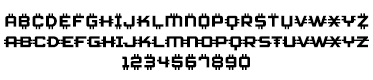
- Mode7 — Link · format: woff
- RuneOrd — Link · format: woff2 · Usage
- Cabal — Link · format: json ·

- BethEllen Regular — Link · format: font/ttf ·

Testnet records
The source catalog also preserved testnet copies. They are useful for provenance and experimentation but are not mainnet public goods.
Capability pages
The catalog is deliberately deeper than a list. Substantial capabilities receive their own pages with exact variants, technical constraints and a separate What this enables section.
- Three.js on Ordinals
- p5.js on Ordinals
- Ordinal recursion
- Inscription delegation
- Inscription provenance
Open research
Audit every catalog entry against its inscription content, upstream source and licence instead of inheriting source labels uncritically.
Find reusable inscription libraries added after the source catalog's July 2025 final commit and add them without turning the page back into a duplicate-heavy raw list.
Identify which public goods have meaningful downstream use in inscriptions, distinguishing “inscribed once” from “became shared infrastructure.”